Certificates are not proof that somebody can deliver a working AI system. They show that the individual has completed a structured body of learning and can be held against a defined knowledge baseline.
That distinction matters. AI has created a market full of impressive course lists, inflated capability claims, and systems that stop at the demonstration layer. The useful question is not whether somebody has collected a certificate. It is whether the learning is visible in the way they scope the problem, control the risks, structure the build, preserve human review, and define what the technology should not be allowed to do.
The credentials shown here form a deliberate progression rather than a random training record.
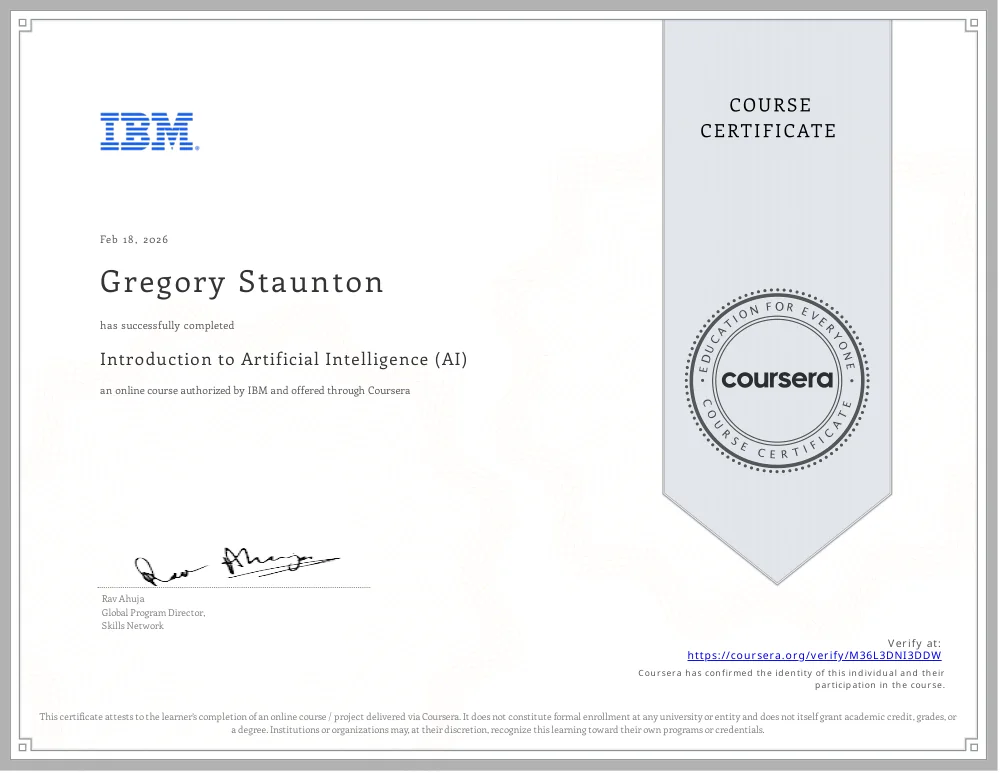
The IBM Introduction to Artificial Intelligence course establishes the broader technical and business vocabulary. It covers the concepts behind artificial intelligence, machine learning, deep learning, generative AI, large language models, application areas, ethics, and responsible adoption.
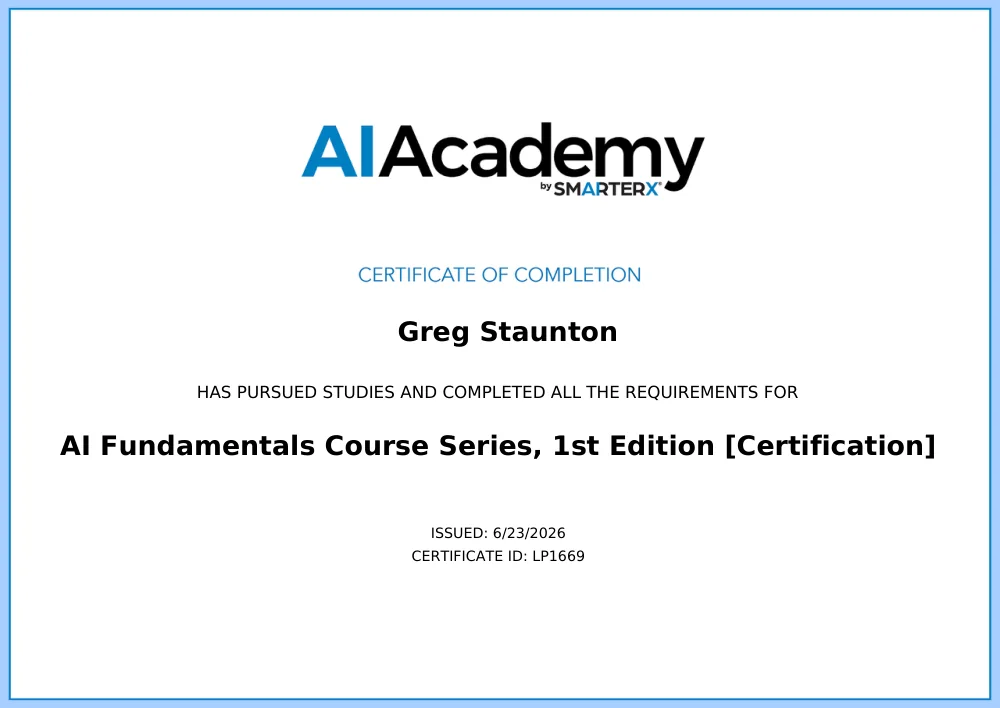
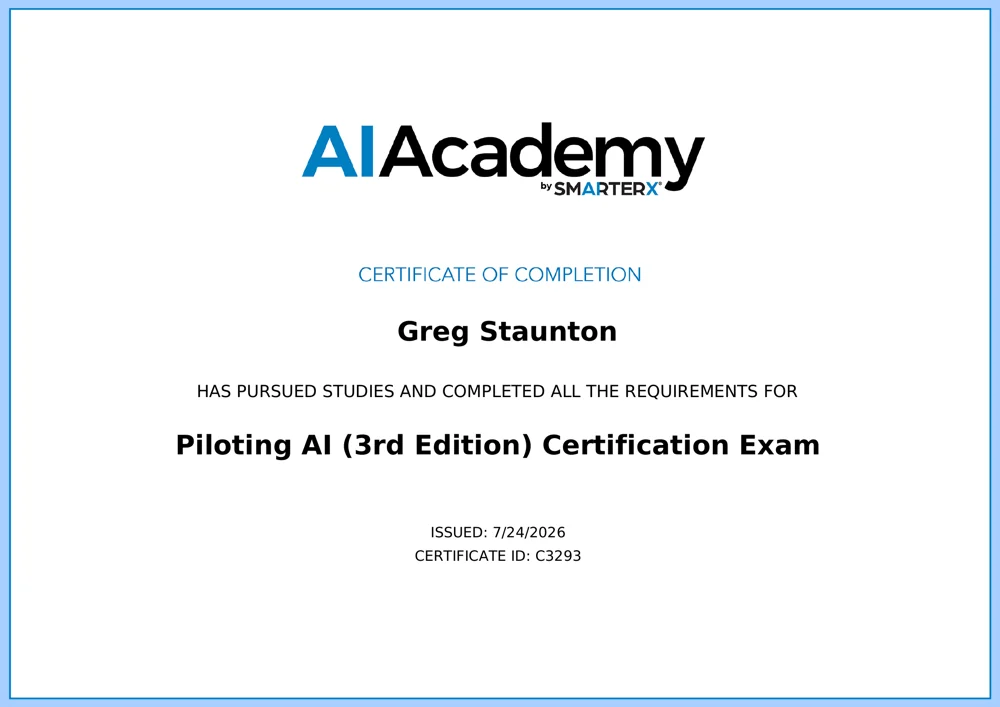
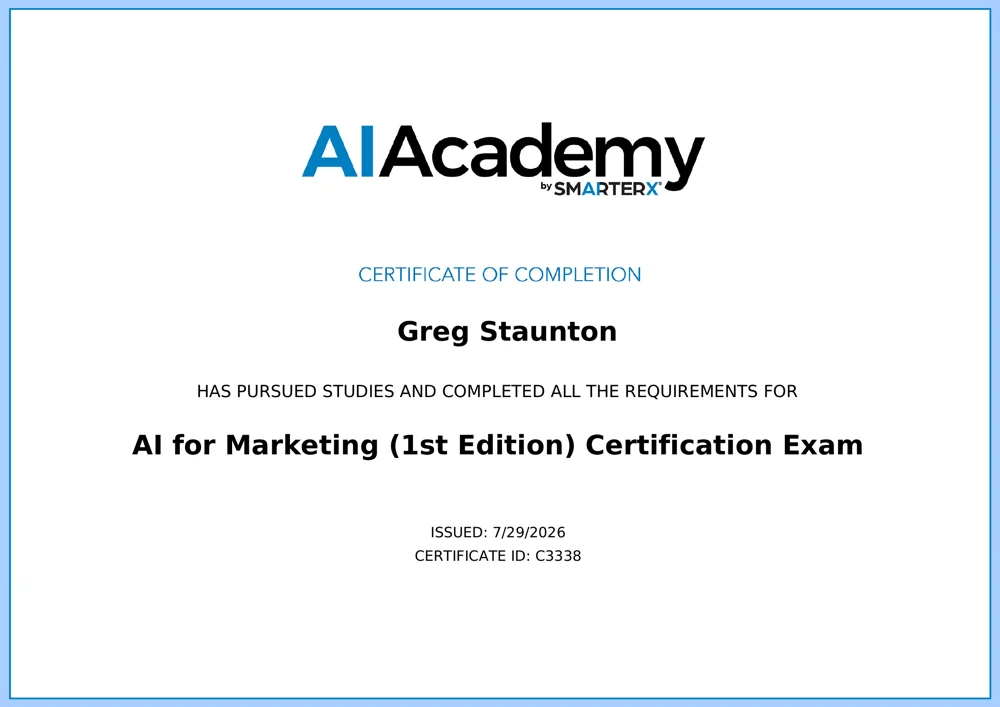
The AI Academy certificates expand that foundation into the current working environment. They connect AI fundamentals with generative AI, prompting, piloting AI inside organisations, and practical marketing use cases.
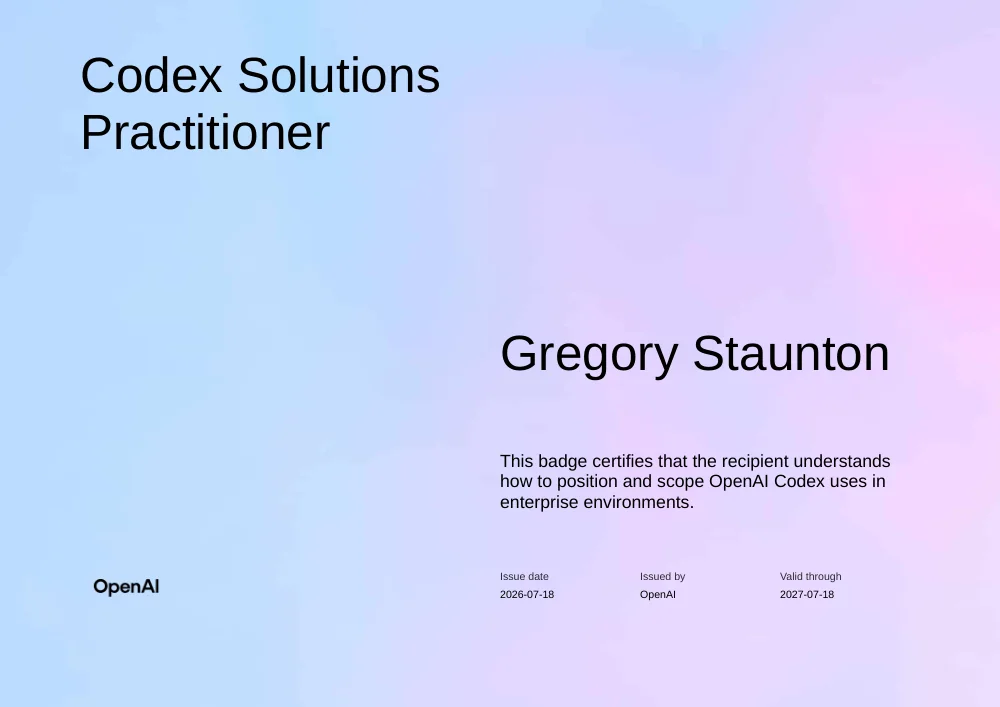
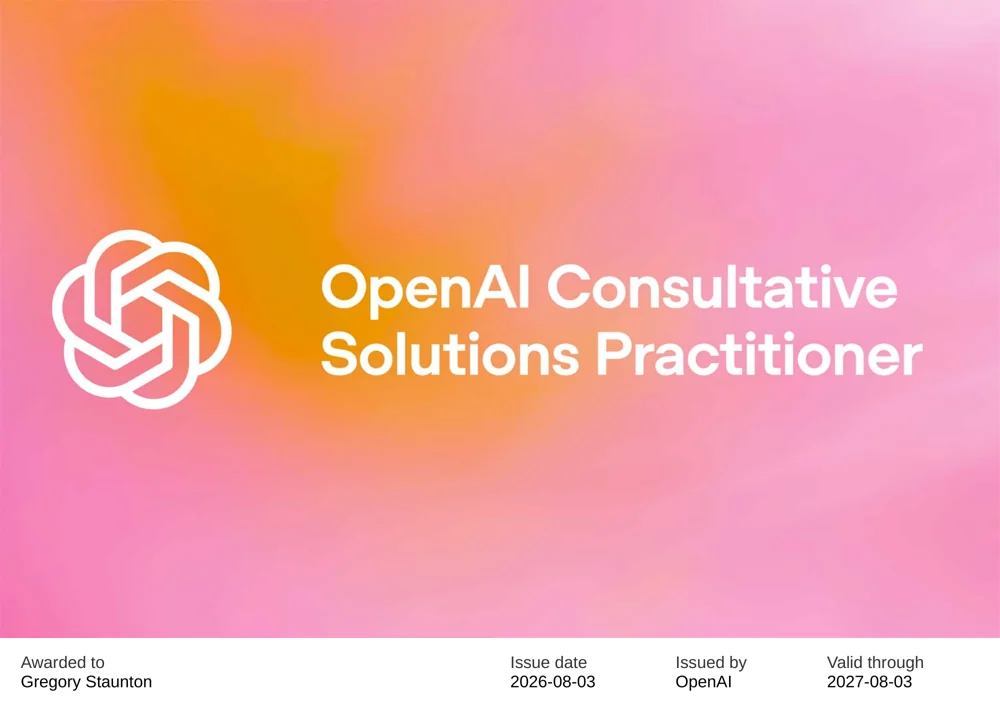
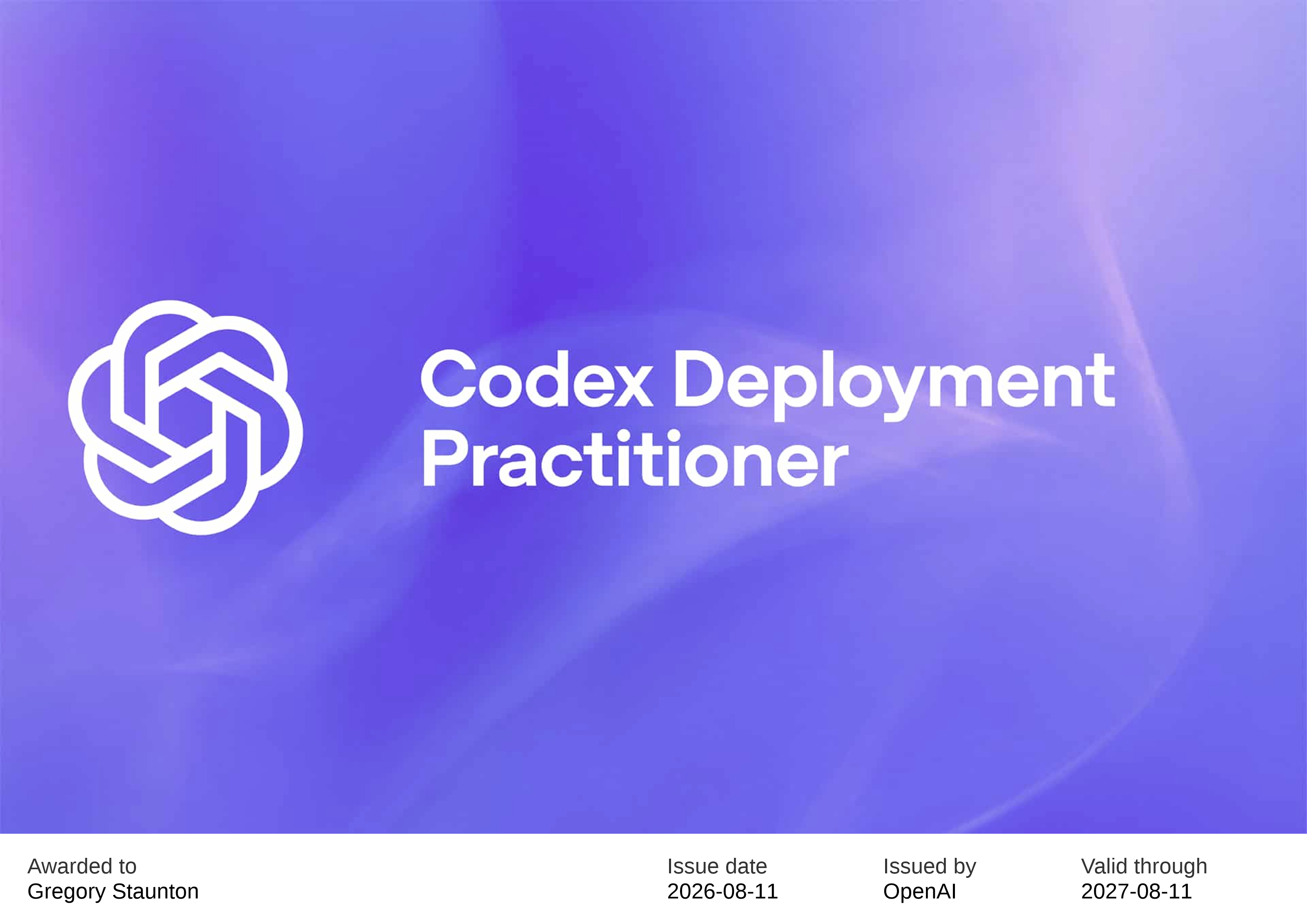
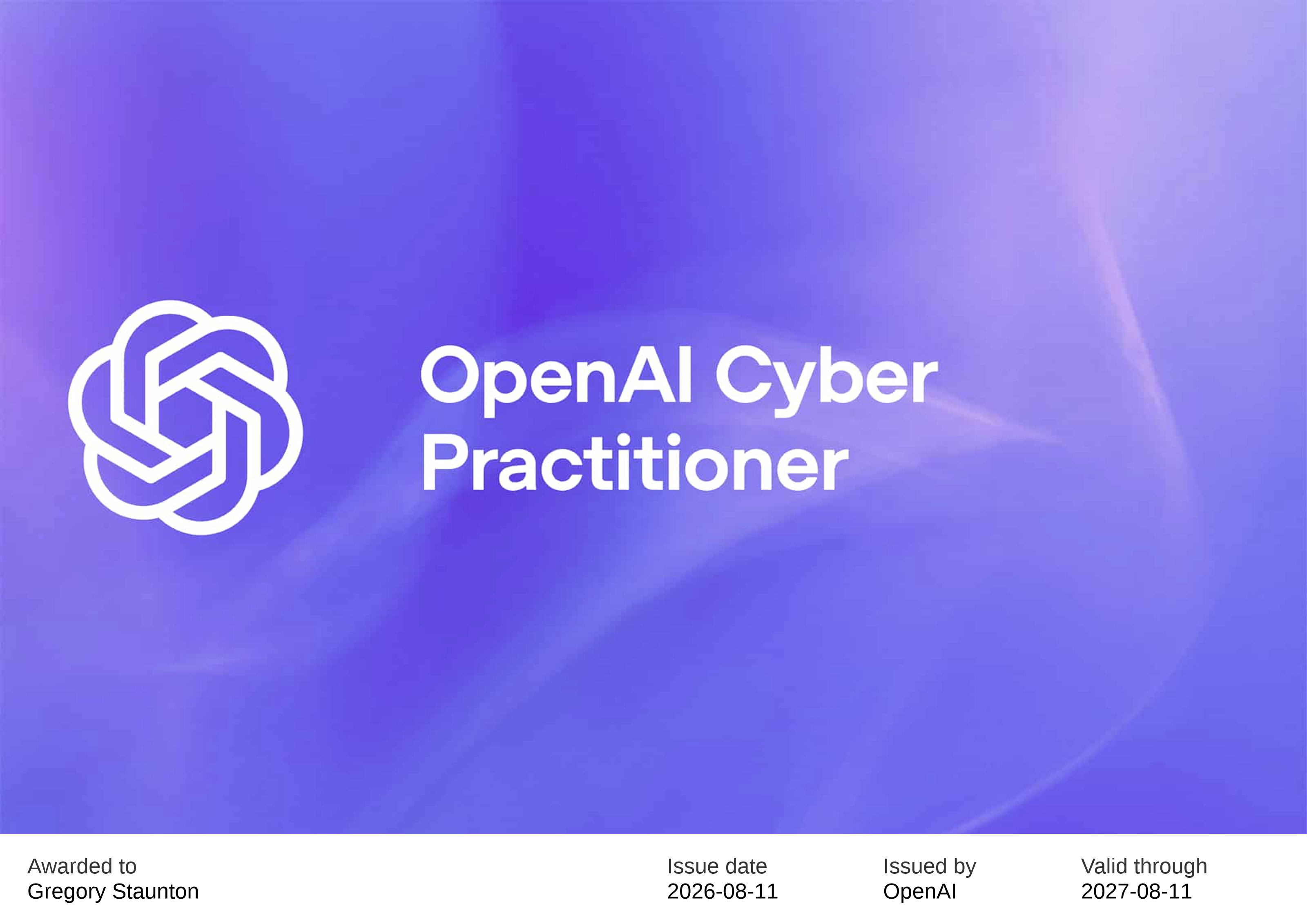
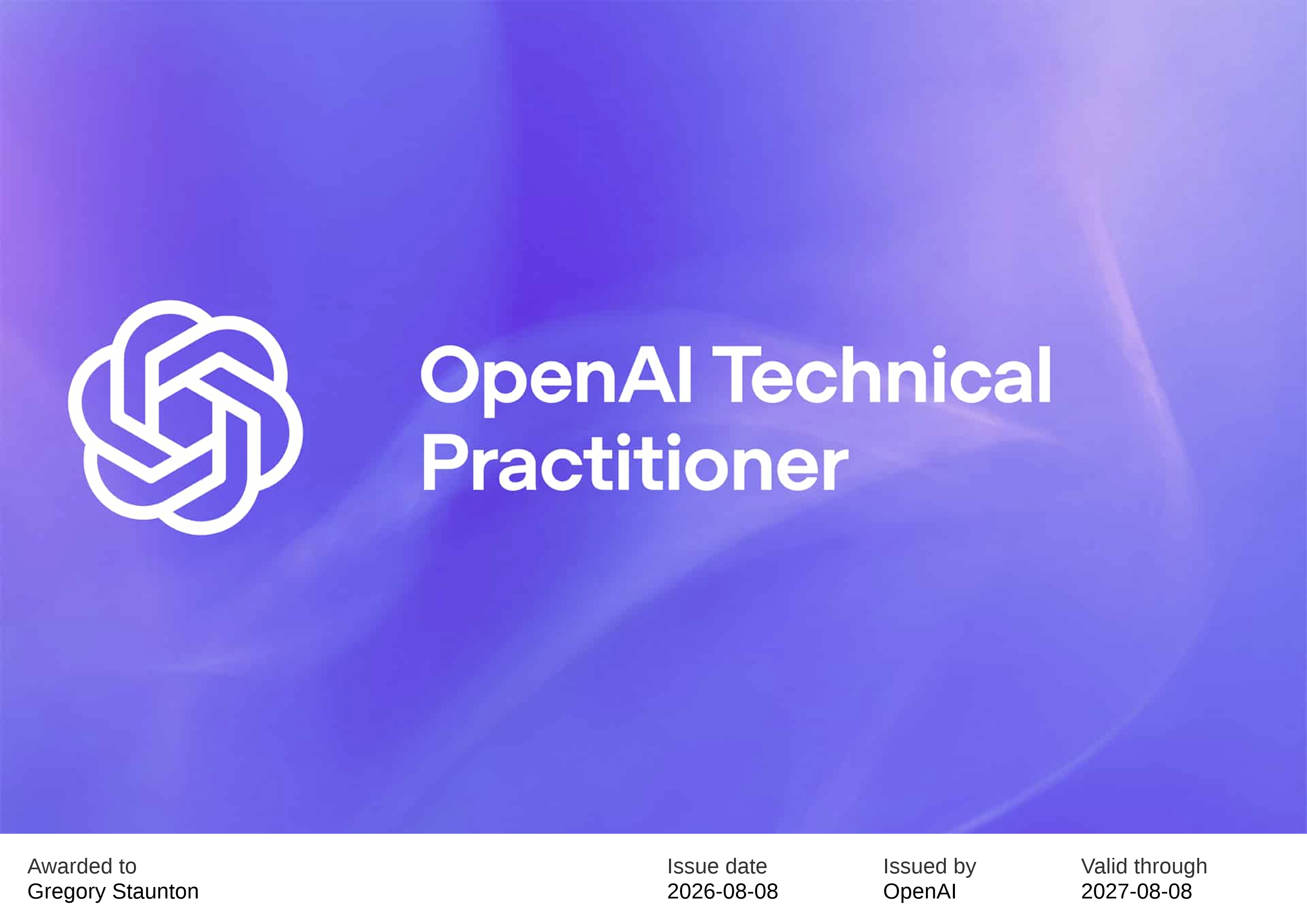
The OpenAI partner credentials take that learning into a more specific enterprise delivery context. Codex Solutions Practitioner focuses on how Codex should be positioned and scoped in enterprise environments. OpenAI Consultative Solutions Practitioner adds a broader consultative layer: how to frame OpenAI-enabled solutions around business need, risk, implementation boundaries, and stakeholder value. Technical, deployment, and cyber practitioner certifications extend the record into implementation and operational risk.
Together, the credentials move from understanding what AI is, through understanding how it is used, to understanding how specific AI capabilities should be positioned within real delivery environments.
They sit on top of approximately 20 years of IT experience and an active body of AI product work. They do not create the capability. They validate, organise, and sharpen parts of it.
The OpenAI credentials are particularly relevant to the way the Pl8ypus systems are being built. Effective use of OpenAI tooling is not simply about asking an agent to produce output. It requires choosing the right problem, defining the boundaries, retaining evidence, preserving human review, and recognising when automation would introduce more risk than value.
The certificates support the case. The systems remain the proof.